
Flat Roof Drains Are Blocked – Here’s What Happens If You Leave It and How to Clear Them
Flat Roof Drains Are Blocked – Here’s What Happens If You Leave It and How
Home / Problems & Climate
Every storm damage assessment we conduct includes written findings and photographic records. That documentation supports property insurance claims accurately - giving Suffolk County property owners the evidence needed to recover repair costs effectively.
Winter temperature swings crack modified bitumen roofing seams and stress EPDM rubber roofing edges on Suffolk County properties. We factor local freeze-thaw exposure directly into membrane recommendations - reducing climate-related failure rates significantly.
A sudden flat roof failure during a nor'easter can't wait until Monday morning. Our emergency roof services keep Suffolk County residential and commercial properties protected whenever urgent roofing situations develop outside business hours.
Properties in West Babylon, West Islip, and other coastal Suffolk County towns face elevated wind uplift loads. Fastening patterns, membrane adhesion specs, and edge detail requirements are adjusted to account for that specific exposure.
Flashing repair, membrane patches, and scupper clearing addressed after the first storm season cost a fraction of the structural deck replacement and full flat roof replacement that deferred conditions eventually require.
Fast storm damage roof repair prevents the moisture infiltration that compounds from membrane into insulation into structural decking - stopping interior ceiling damage, mold conditions, and structural repair costs from developing on the floors below.
Documented storm damage roof repair and preventive maintenance protect roofing warranty validity - demonstrating that the system received appropriate care rather than deferred response that manufacturers can use to deny coverage claims.
Our emergency flat roof repair process includes written damage documentation and photographic records - providing the detailed assessment records that support property insurance claims for qualifying storm damage events across Suffolk County.
Flat Roof Drains Are Blocked – Here’s What Happens If You Leave It and How
Ponding Water on Your Long Island Flat Roof – Why It Happens Here and What
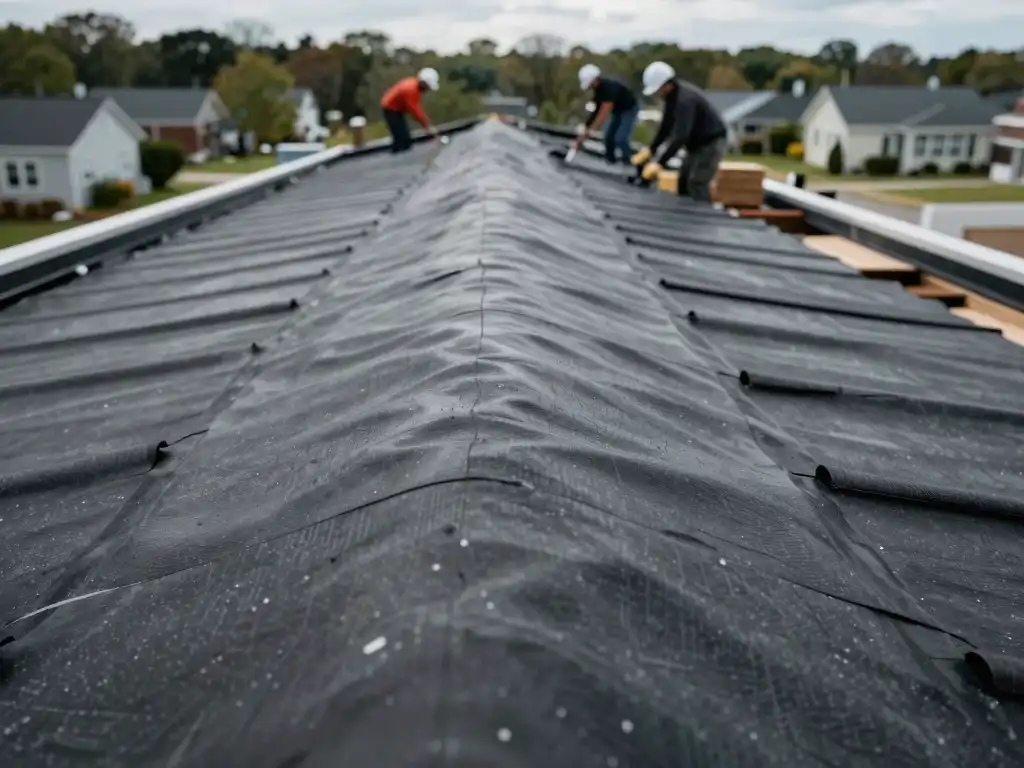
What "flat" really means, why low-slope roofs behave nothing like pitched ones, and what that changes about how they get built and looked after.
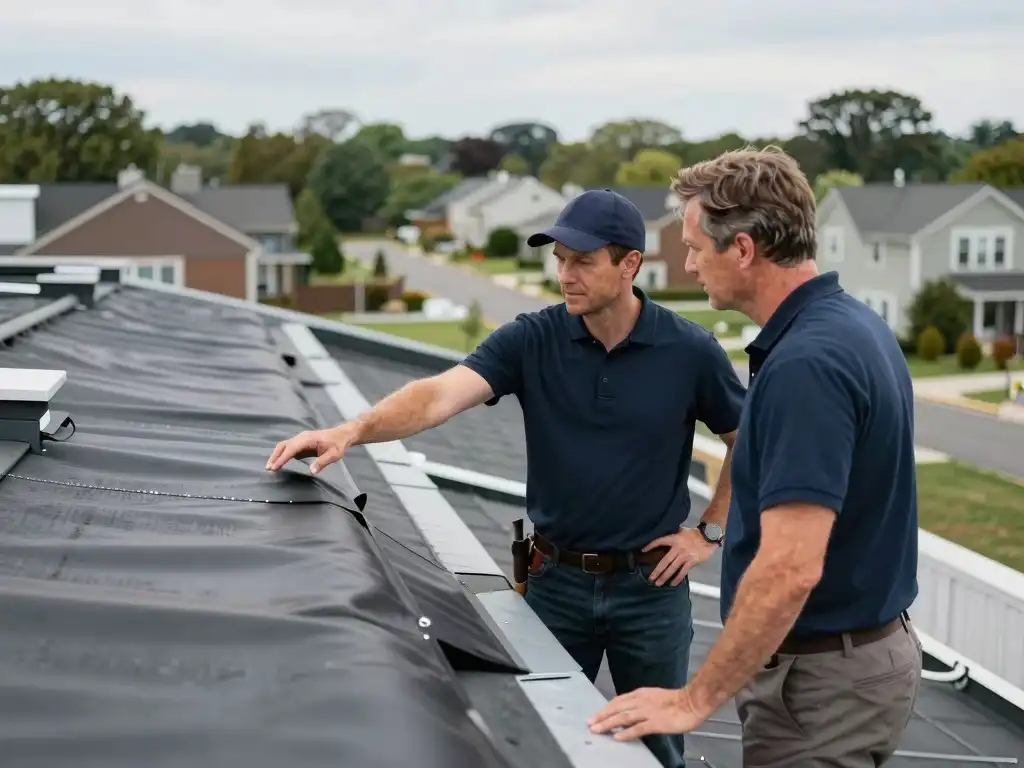
The first questions answered: rough cost ranges, how long a job takes, which permits apply, and what to expect while the work is happening.
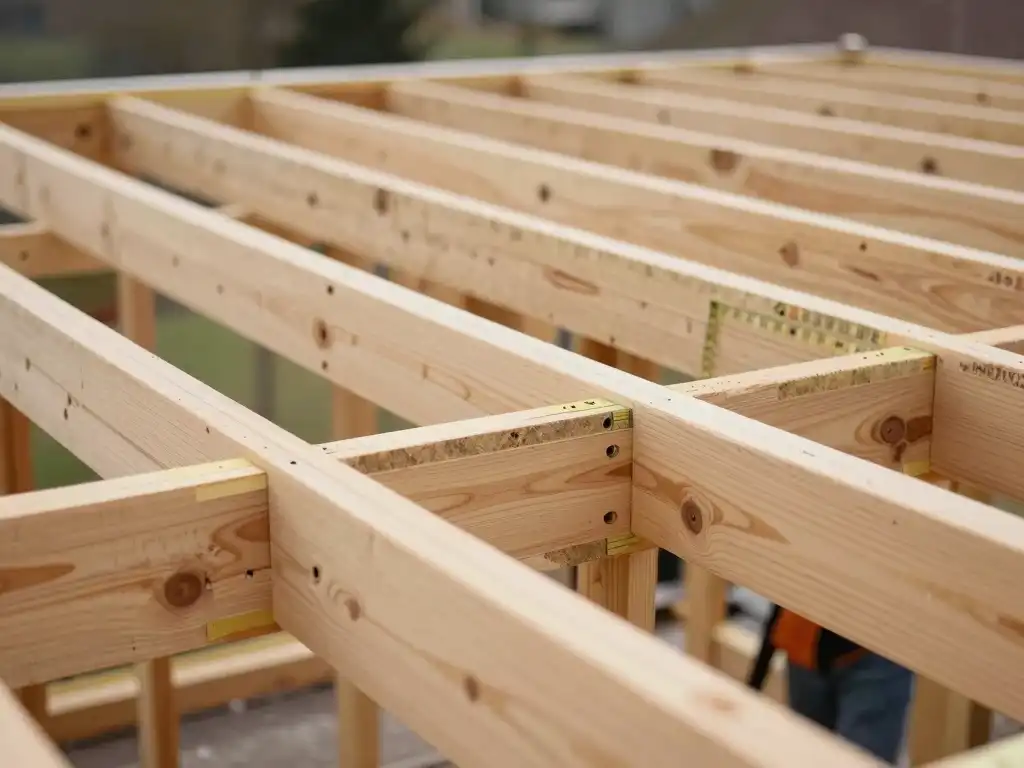
How flat roofs sit on additions, dormers, and rear extensions, and how the structure underneath carries snow, foot traffic, and rooftop equipment.
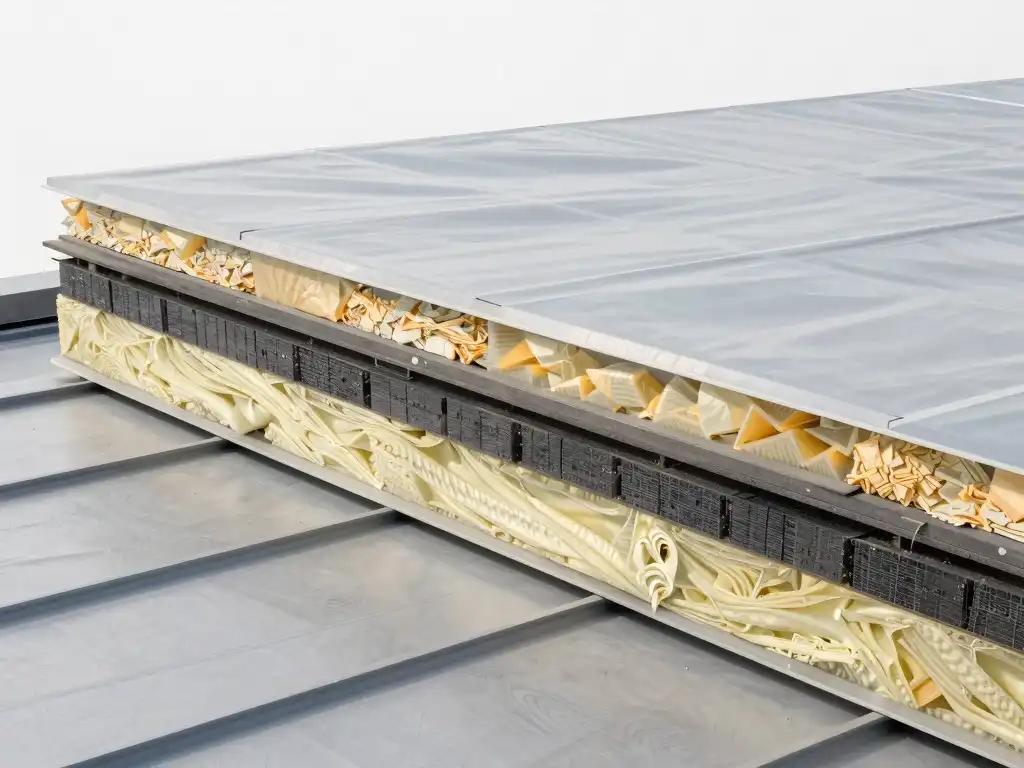
Decking, substrate, slope, fasteners, and the structural movement a membrane has to ride out without splitting.
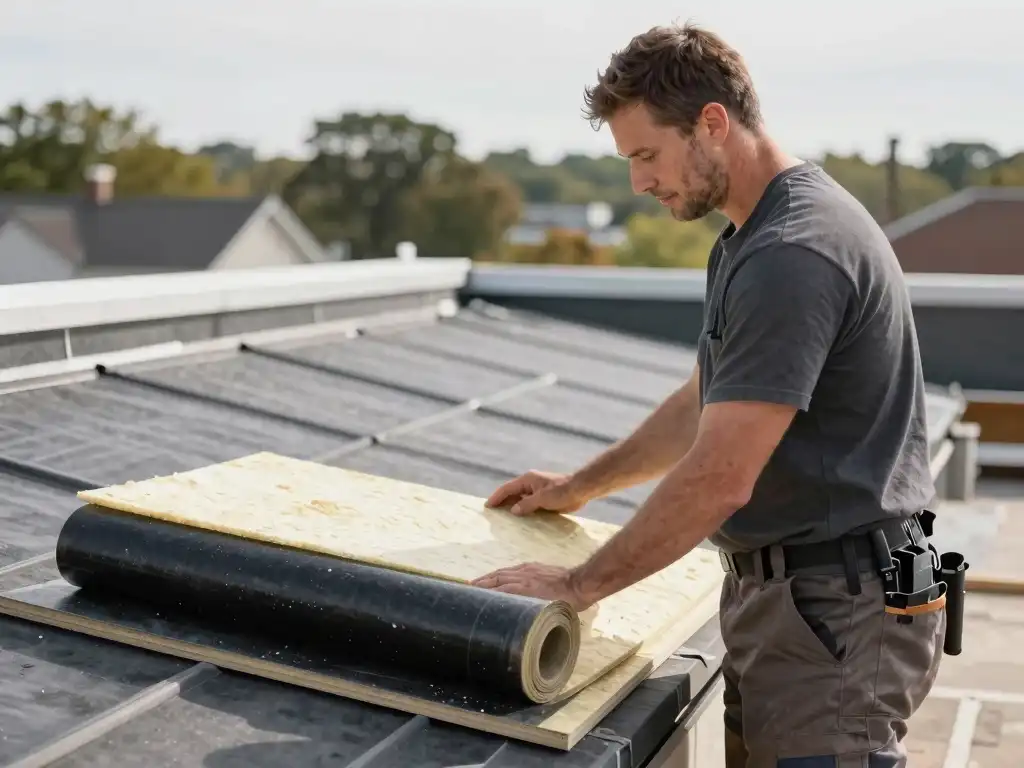
The main membrane families, TPO, PVC, EPDM, modified bitumen, and single-ply rubber, and how each one is actually put down.
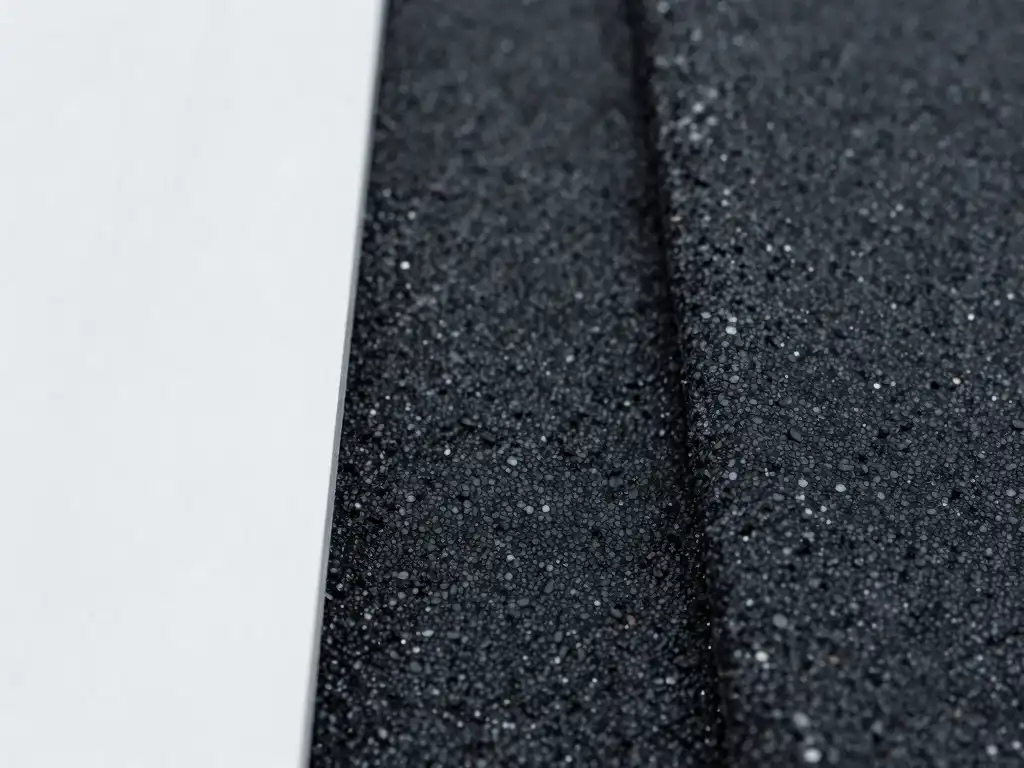
The membranes head to head: which one holds up best for your building, your budget, and your exposure to sun and weather.
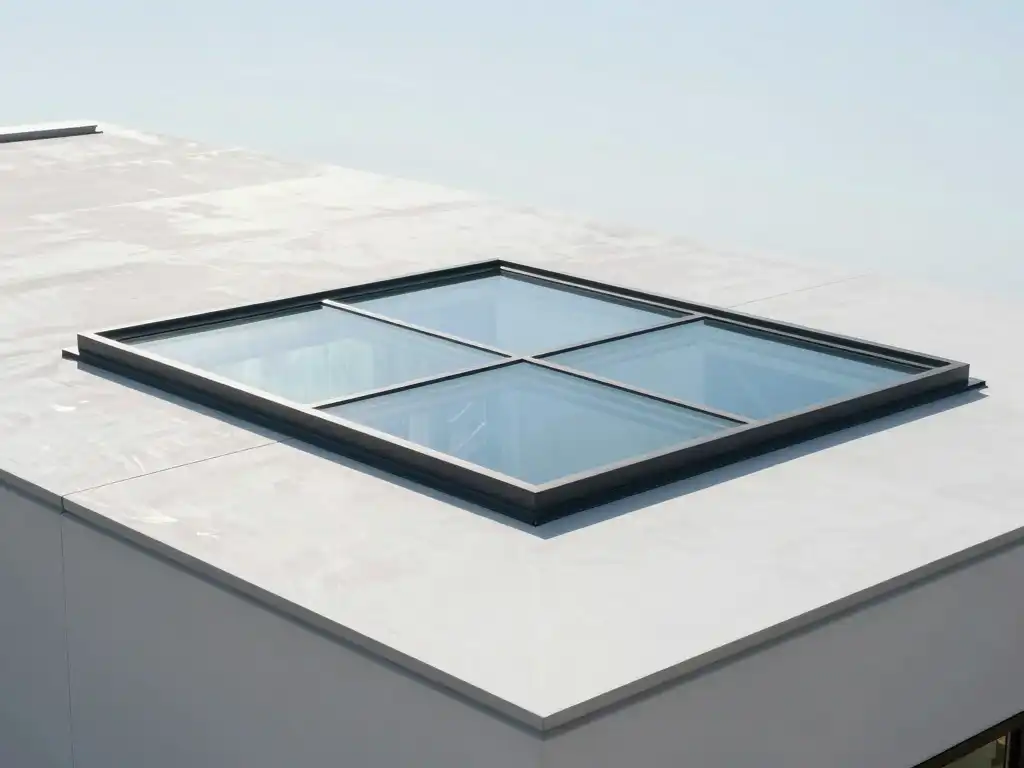
Curbs, counter-flashing, and the details that keep a skylight from becoming the first place the roof leaks.

Tapered insulation, R-value, condensation control, and venting that stops moisture from building up beneath the membrane.
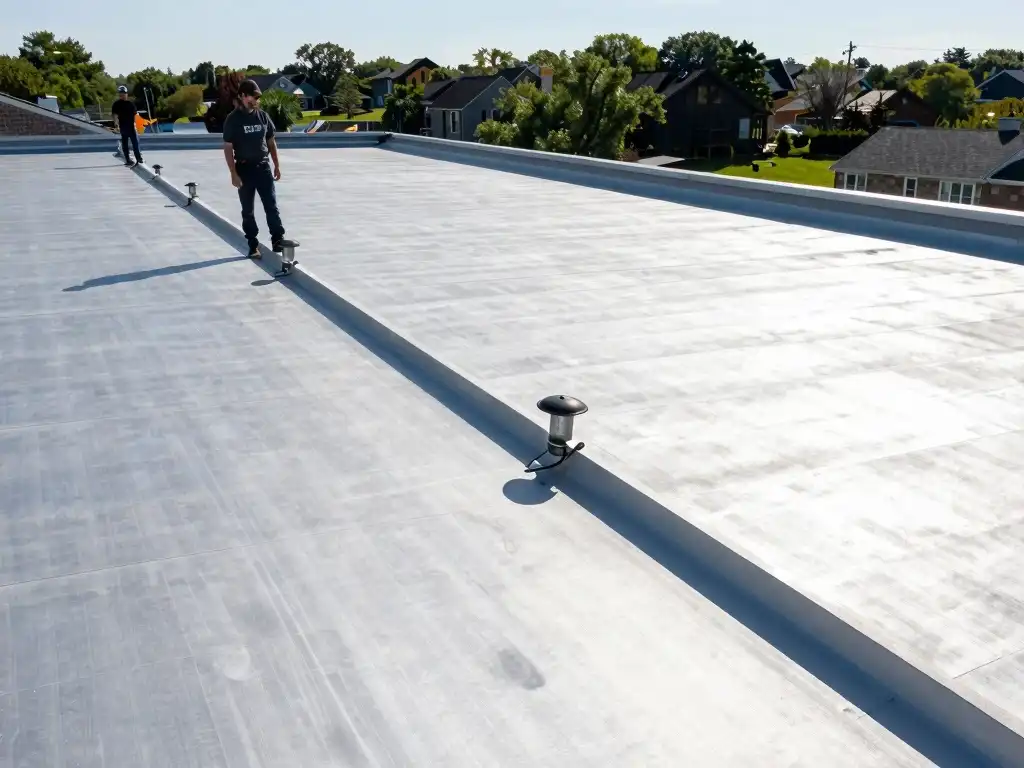
Drains, scuppers, tapered systems, and why getting water off the roof matters more than nearly anything else you can do for it.
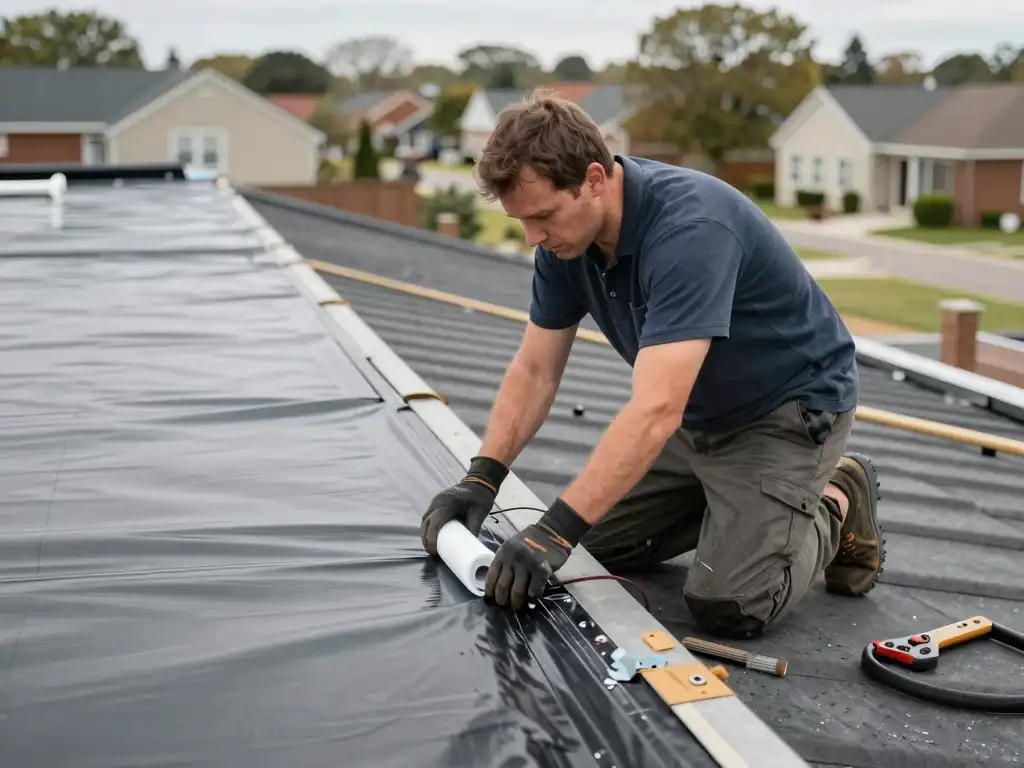
What a flat roof needs each year, and what actually carries it to the top end of its rated life instead of the bottom.
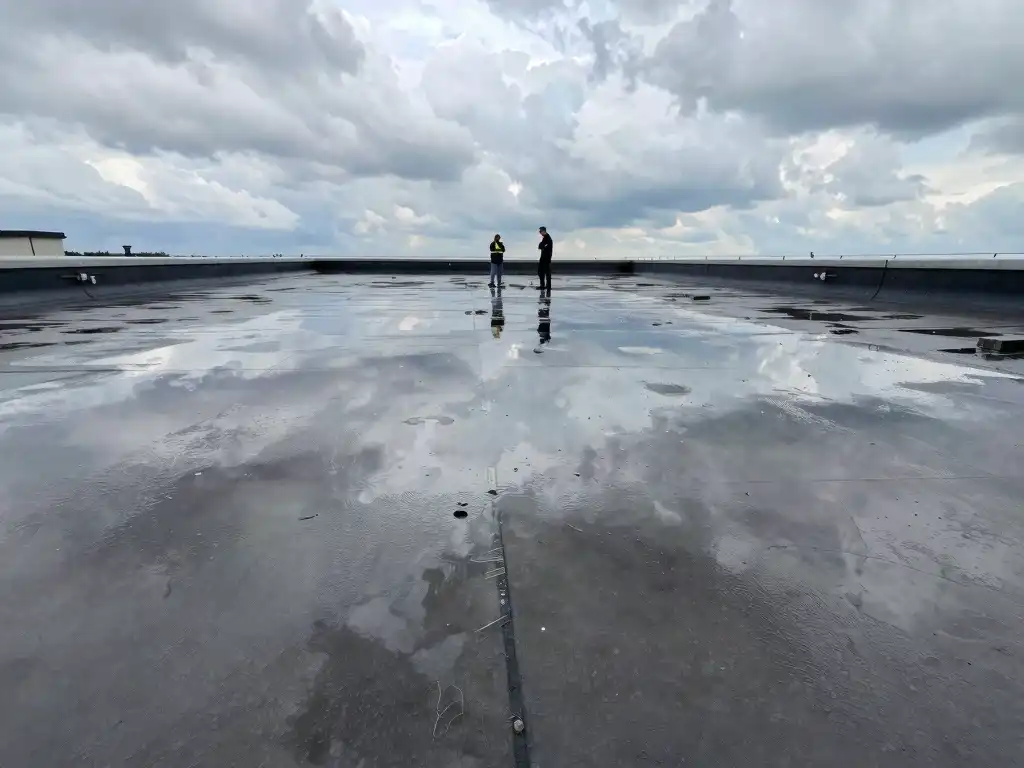
Ponding, blistering, wind uplift, and snow load, and how the coastal weather off the South Shore drives each one.